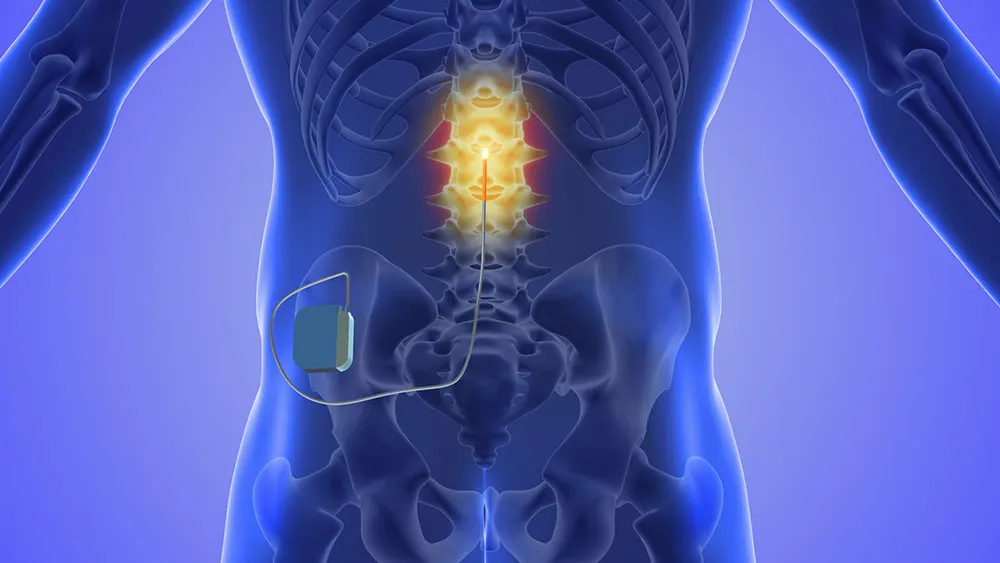
The conversations at this year’s NANS annual meeting pointed to a field at an inflection point. Neuromodulation technologies have become much more sophisticated, more data-rich, and more clinically ambitious — and that shift is putting new pressure on medical device teams.
Across booth conversations and standing-room-only sessions, one theme kept resurfacing:
The next generation of neuromodulation won’t be limited by ideas — it will be limited by execution.
What Modern Medical Device Teams Are Looking For
Teams with whom we spoke came to us with remarkably consistent challenges:
- Power limitations that are constraining device capabilities, slowing time to market, and limiting which patients can benefit from new therapies. Challenges range from limited depth of power transfer causing inadequate performance, for example through the skull, stomach, or abdomen, to excessive heating at higher power levels.
- Demand for miniaturized implants that can deliver power reliably across a wider range of anatomies, without compromising safety or performance.
- The need to accelerate R&D: Teams are under pressure to move faster — not always to be first, but to get to market with the capabilities needed to meet and exceed expectations for intelligence, usability, and data continue to rise. That's where the value of finding trusted partners comes in.
More than one conversation echoed a sentiment we heard on stage when Nalu Medical CTO Prabodh Mathur and Resonant Link Medical CEO Omari Bouknight spoke: “We don’t have the luxury of getting this wrong.” Owning your IP while moving fast requires trusting experts to handle critical subsystems — especially when mistakes are costly and timelines are tight.
Fireside Chat Takeaways: The Rise of Data-Rich, Precision Neurotech
In a standout fireside chat, Omari Bouknight, CEO of Resonant Link Medical, and Prabodh Mathur, CTO of Nalu Medical, explored what it takes to build next-generation neurotechnology — and why power and systems thinking sit at the center of it.
Several themes stood out:
Speed Comes from Focused Collaboration, Not Silos
Modern neuromodulation systems are extraordinarily sophisticated. While it’s theoretically possible to build every capability in-house, doing so often costs the one thing companies can’t afford to lose: time.
As Prabodh put it, companies get credit for “great products delivered quickly”. Choosing the right partners enables teams to operate at the velocity required, without sacrificing quality or control.
One-Year Development Cycles are Ideal
“If you had the chance to do it again, would you build it the same way?” Almost no one would.
Shorter development cycles — on the order of a year from marketing agreement to next-gen delivery — create a cadence of learning that helps teams avoid over-engineering while still advancing meaningfully. Fast development cycles are also essential for demonstrating progress to internal and external stakeholders.
Design for the Entire Ecosystem
Successful devices don’t just work — they fit seamlessly into clinical workflows and patient lives. That means when concepting and developing new devices, teams need to be:
- Engaging everyone who interacts with the device
- Prioritizing the clinical staff experience
- Thinking in terms of total patient experience, not isolated components
Fresh Thinking Matters
Deep domain expertise is essential — but it can also become a constraint. Some of the most impactful innovation comes from engineers, system thinkers, and collaborators who bring perspectives from outside traditional implantable device development.
Looking Ahead: What’s Next for Neuromodulation
Over the next five years, excitement is building around:
- New nerve targets that expand the reach of neuromodulation
- True closed-loop systems driven by physiological signals
- AI-enabled insights that help explain why patients do — or don’t — achieve clinical success, from programming to patient selection
All of it points back to the same foundation: reliable, scalable, intelligent power as an enabler — not a bottleneck. At NANS, one thing was clear: the future of neuromodulation will belong to teams that move quickly, think system-wide, and choose partners who help them get it right the first time. If you’re interested in partnering, contact us to discuss what’s possible for your device.