
Over the last decade, medical device development has grown much more complex. The landscape has evolved from single‑purpose programmable devices into intelligent systems that blend hardware, software, sensing and real-time closed-loop control.
This shift impacts strategic decisions across the industry. For incumbents with established revenue, it poses long-term questions about driving market growth, defending market share and how to invest in innovation. For leaders of emerging companies building intelligent devices, the added complexity impacts both time and capital required to reach key clinical and regulatory milestones.
We've seen this shift firsthand, having spent the past decade helping implantable device companies make their devices smaller, smarter, and longer lasting using our industry-leading Aurion WPTTM wireless power and data transfer technology. That's why we partnered with Neurotech Futures to gather key insights and best practices from our extensive network of medical device customers and partners. We wanted to know what's working for the entrepreneurs and operators innovating in this era.
What follows is expert guidance that leaders can use to derisk device development, get to market efficiently, and set up their technologies for commercial success.
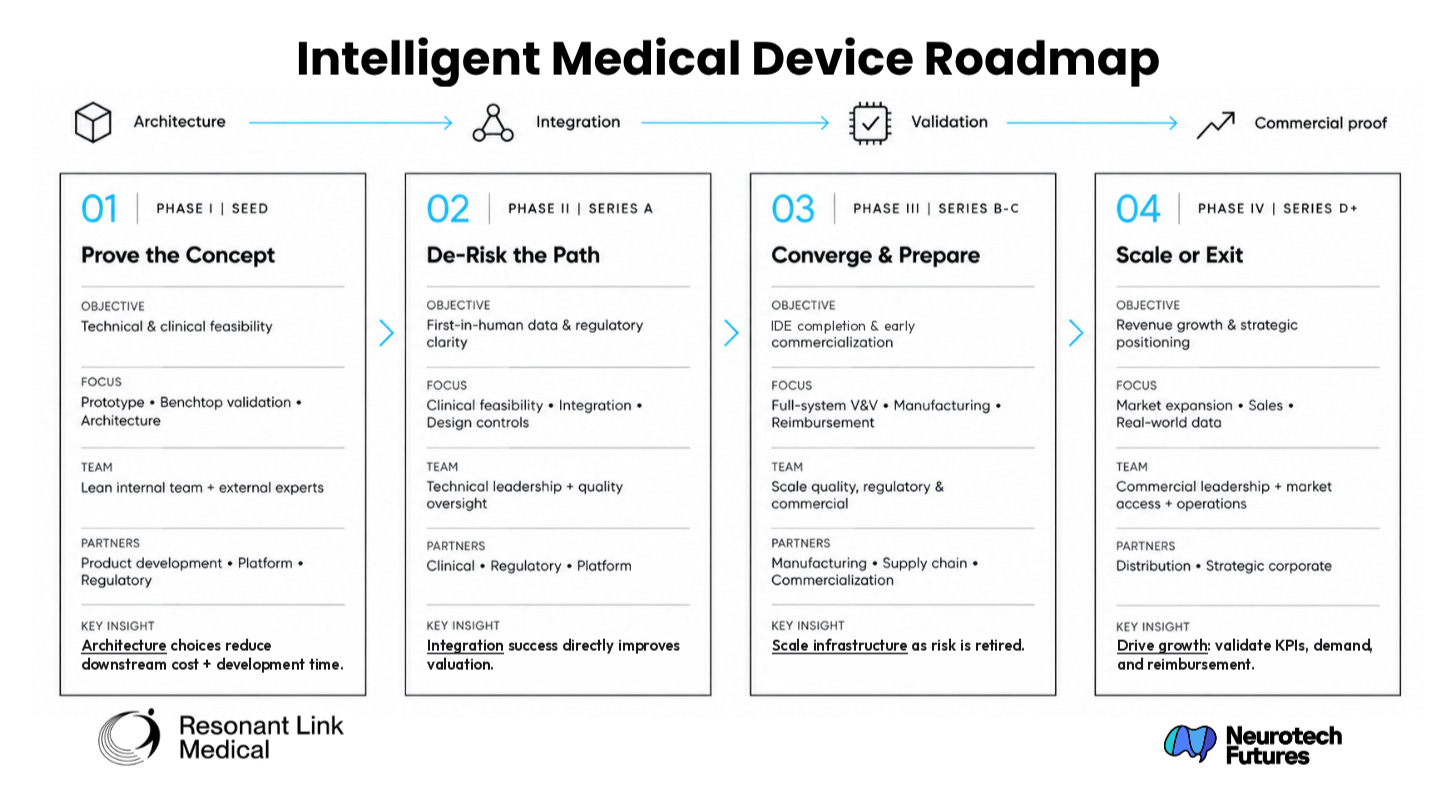
Introduction: Unlocking a Convergence Strategy
Modern Class III devices effectively connect patients to an increasingly digital world. This convergence of a device, a person’s biological system, and the world outside is reshaping commercial R&D strategy: Algorithms depend on sensors, which depend on power and packaging. Intertwined with those mechanics are the user experiences for patients, caregivers and clinicians, which are in turn dependent on connectivity and data processing.
In this context, class III regulatory submissions require holistic planning. Every new interface, from implant to charger, firmware to app, cloud to clinical workflow, adds interactions requiring premeditated design, validation, and documentation.
Fundraising against this complex R&D requires architecting the whole business for speed and strategic value. How efficiently a system moves toward a stable, validated, submission-ready state depends on stripping out unnecessary complexity. Partnering with external firms that have specialized capabilities and demonstrated expertise in-market can save millions in manufacturing and engineering costs while improving predictable performance.
In short, a competitive advantage is emerging based on what founders choose not to build as well as what they commit to taking on as a core.
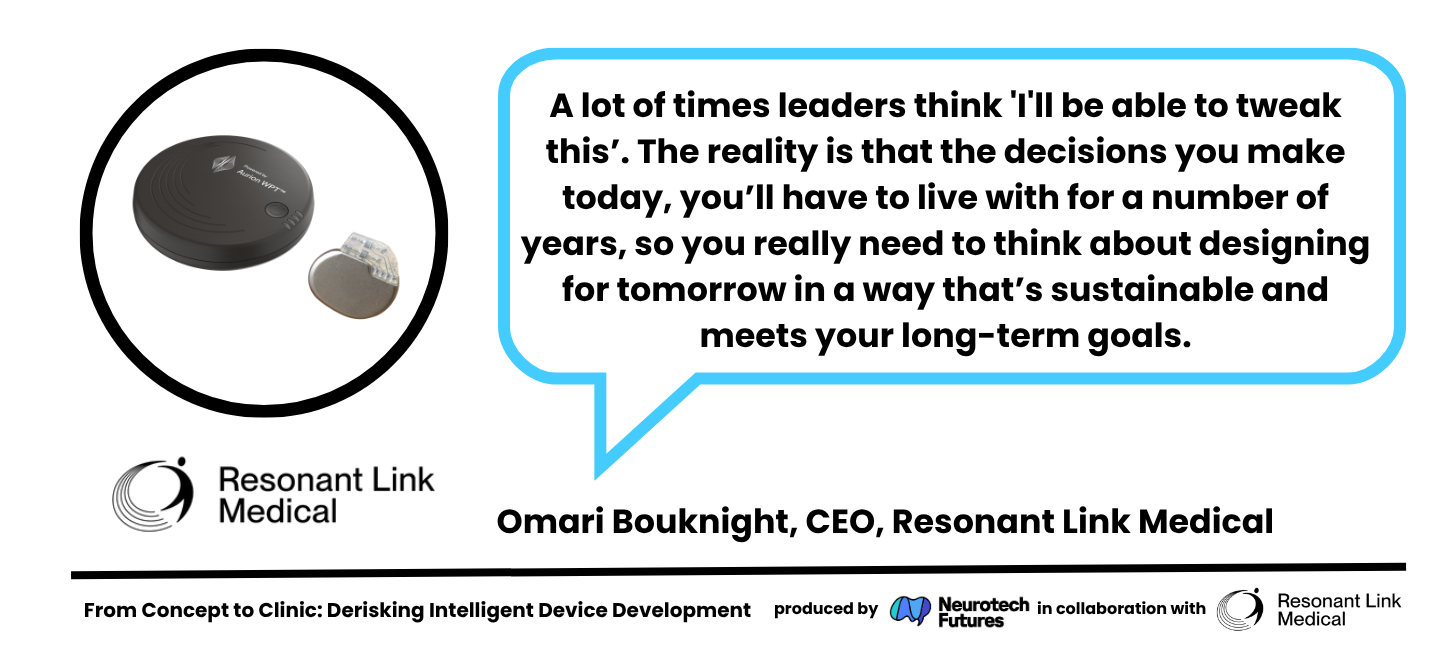
Three Best Practices: Core Value, Milestone Inflections, and Market Success
In gathering insights from medtech leaders who have built, scaled, and sold medtech companies in the last two years, three guiding principles emerge for going from concept to clinic and then to market success.
1. Focus on Core Differentiators to Identify Strategic Value
Intelligent systems demand a complete set of integrated capabilities: electronics and packaging, firmware, wireless links, data pipelines, analytics, and closed‑loop logic. Conventional thinking dictates building a moat by investing in full production and owning methods and capabilities in-house.
However, early over-investment in infrastructure - from talent to tools - creates business risks by introducing tradeoffs at a critical stage. Tradeoffs include reducing capital allocation to other domains, increasing operational complexity, and diverting founders’ attention from core priorities.
Beyond building a product, medtech entrepreneurship demands operational excellence across clinical, regulatory, quality, manufacturing, market access, and key commercial functions such as fundraising, hiring, and partnering.
With a mature third-party R&D ecosystem, one strategy gaining popularity is steering internal resources towards a company’s core intellectual property and differentiating capabilities, while leveraging validated platforms and external partners for execution-heavy functions. This stage-by-stage strategy requires identifying those core capabilities as the company’s foundation, and building funding, hiring, and partnering strategy from there.
Leaning on development platforms and external partners like contract manufacturing firms or specialized consultants can dramatically accelerate progress and reduce integration risk. This is particularly relevant from the early stages where flexibility is critical and decisions compound over time.
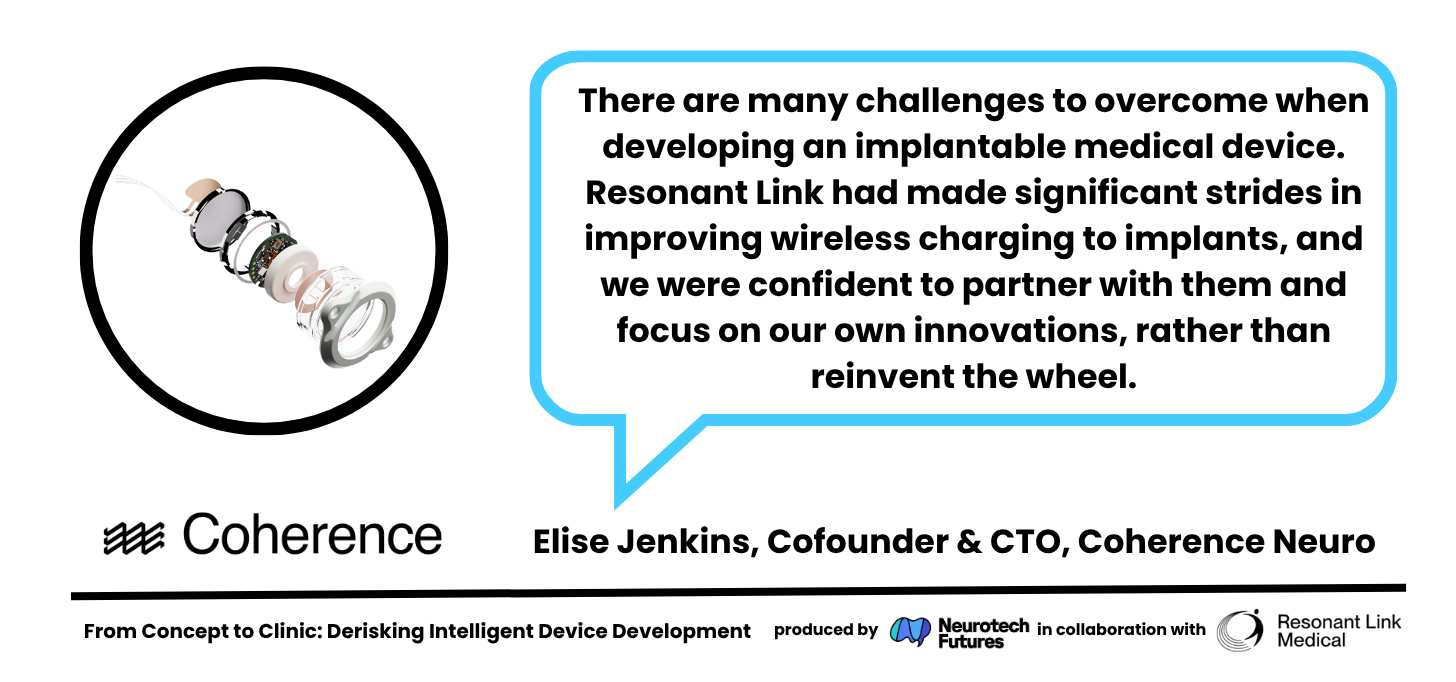
Earlier this year, Coherence Neuro temporarily implanted three patients undergoing brain tumor removal with thin-film neurotechnologies. The study’s findings of neurophysiological mapping and stimulation during brain tumor resection will inform the development of SOMA-1, the company’s next-generation, wirelessly powered implant.
Coherence’s efficient timeline in reaching this milestone, just three years after founding, offers a template for advancing stepwise product and clinical strategies with a unified vision. Elise Jenkins and Ben Woodington co-founded the company in 2023, then launched a first safety study and biomarker exploration that same year. After training a prediction and classification model to identify glioma progression, presence, and severity in 2024, they closed a $10M seed raise to kick off their US expansion in 2025.
Coherence Neuro partnered with Resonant Link Medical in early 2023 on the development of their wireless power link. By identifying and leveraging external partners early on, Coherence maintained focus on advancing their core IP, accelerating to first-in-human in unprecedented timelines.
2. R&D Milestones are Inflection Points
MedTech entrepreneurship boils down to meeting a sequence of milestones. These vary based on type of device, regulatory pathway, and market segment, but generally follow this sequence:
- Prototype validation
- First-in-human data
- Regulatory submission
- Clearance/approval
- Early commercialization
However, reaching each checkpoint is no guarantee of commercial success. Rather, positive outcomes must be planned and integrated with downstream milestones. Thus reducing clinical risk, accelerating product development, and attracting investors and talent are not a checklist, but a compound strategy.
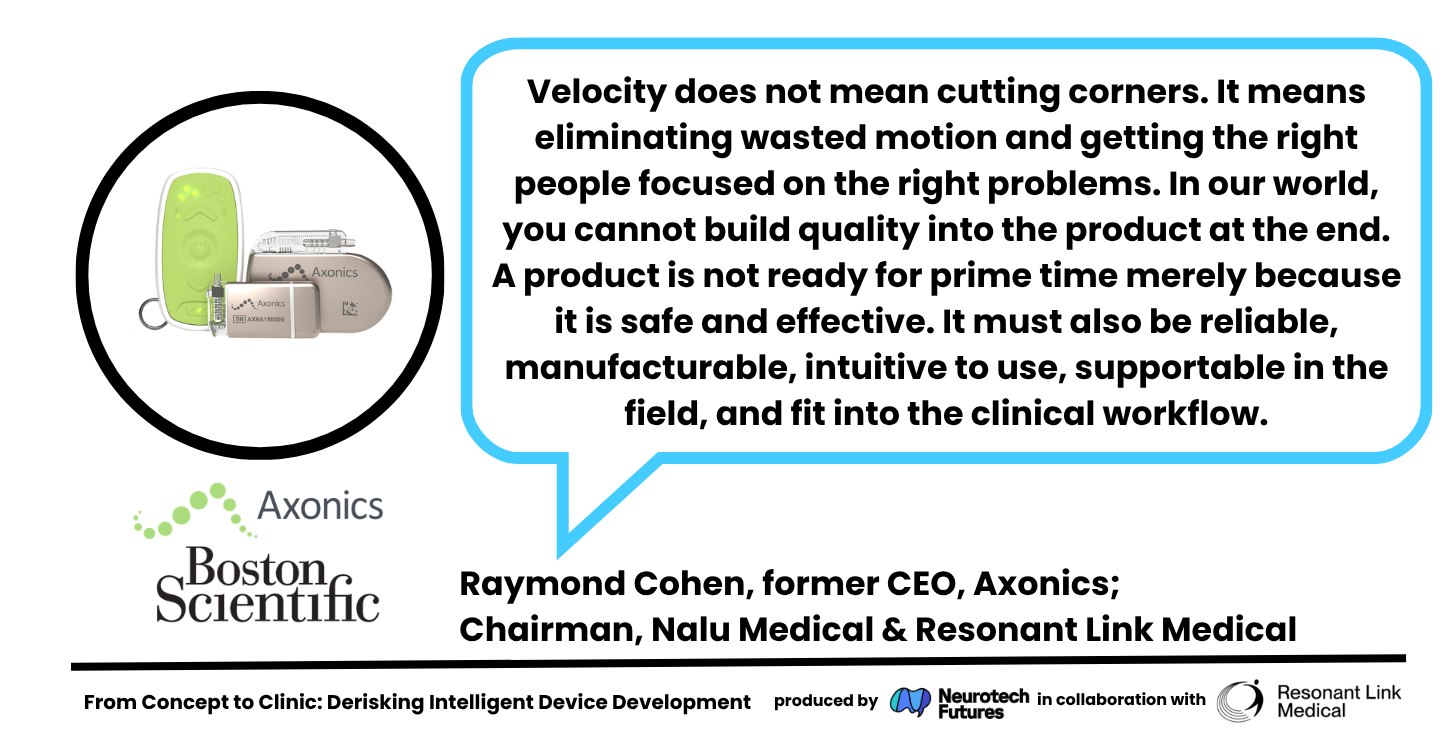
Accelerating regulated clinical timelines is difficult, but there are steps companies can take to set themselves up for subsequent success at each stage. For example, validating a prototype by leveraging external technology or partners can derisk a product incrementally while reducing development time and costs. Some steps will vary company to company, while some will be consistent.
Each device’s specific development path will vary based on the company’s commercial DNA. This includes the founding team’s skillsets, experiences, and network, as well as market dynamics, regulatory decisions, and other factors. That’s why it’s wise for leaders to regularly revisit milestone roadmaps with fresh eyes, at a minimum prior to each board meeting.
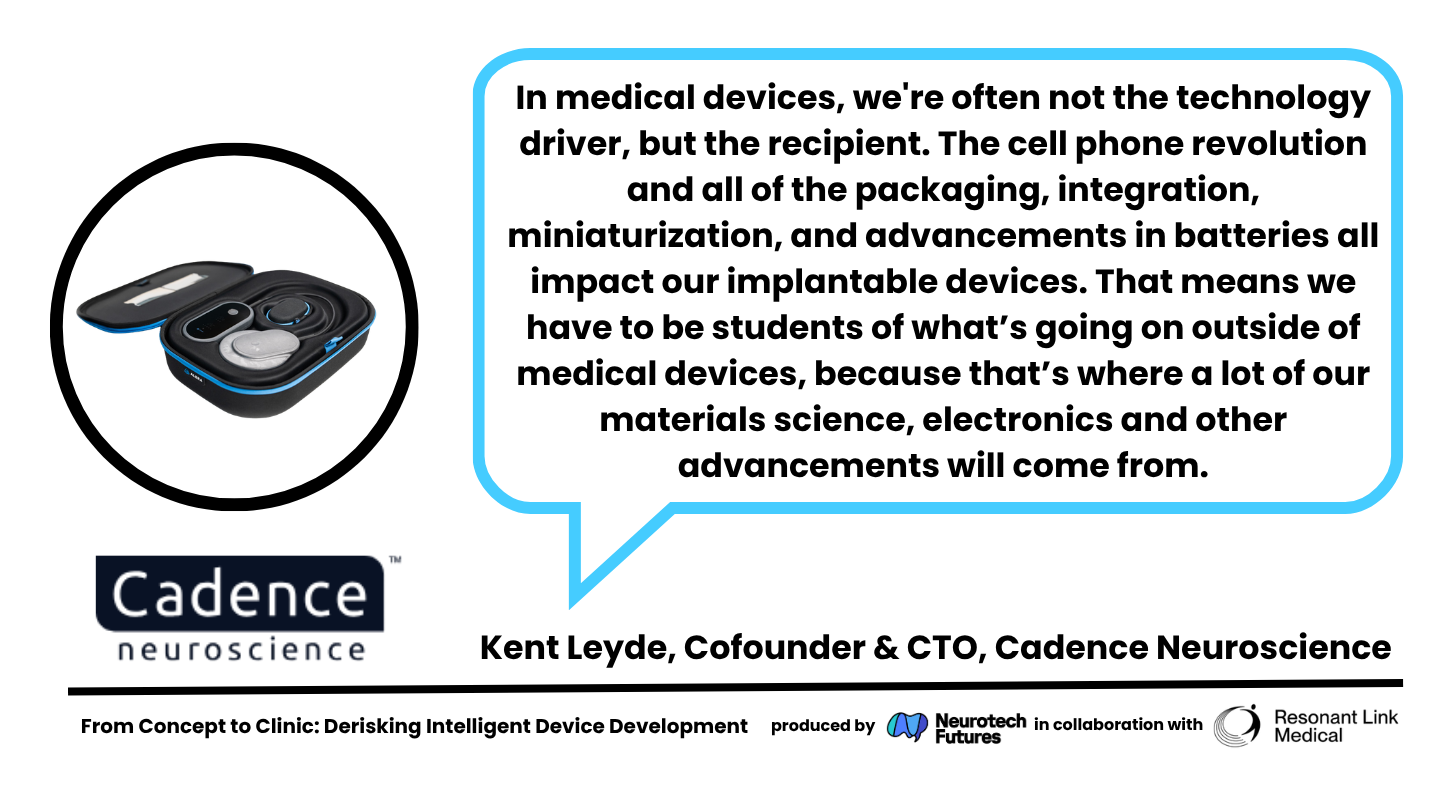
Accelerating gradually can pay off too. In July 2026, Cadence Neuroscience received its IDE from the FDA to initiate its safety study of an implantable system to treat drug-resistant epilepsy. Kent Leyde and Doug Sheffield co-founded the startup in 2017 to commercialize treatment originally developed at Mayo Clinic, a partnership whose foundation was cemented with a $15M series A in 2019.
Since then, Cadence has made the deliberate commitment to develop a purpose-built, patient-optimized implanted system for personalized protocol delivery. Building its clinical study strategy with Mayo while designing its technology at the same time helped secure a $25M series B in 2023 led by Angelini Ventures, Lumira Biosciences Fund, F-Prime Capital, LivaNova, and JAZZ Ventures, among others.
This product/market focus and clinical strategy reflects Leyde’s perspectives from a career of navigating emerging technology and advances in epilepsy care. Prior to cofounding Cadence, Leyde was the CTO at NeuroVista, a seizure prediction company. Before that he was the Director of Engineering at NorthStar Neuroscience, one of the earliest implanted cortical stimulation companies.
Focusing on product development and clinical partnership from the outset may open downstream clinical indications. In Cadence Neuroscience’s Series B press release from May 2023, Paolo Di Giorgio, CEO of Angelini Ventures said: “We believe Cadence’s platform solution has the potential to become an important standard of care in drug-resistant epilepsy as well as other difficult-to-treat brain disorders.”
Cadence’s approach to treating drug-resistant epilepsy is new and may serve as a foundation to treat other neurological disorders in the future. How they’ve chosen to develop their treatment is not new. They’ve intentionally leveraged materials, manufacturing partners, and external platforms that do the job well so they can focus on what’s unique to them.
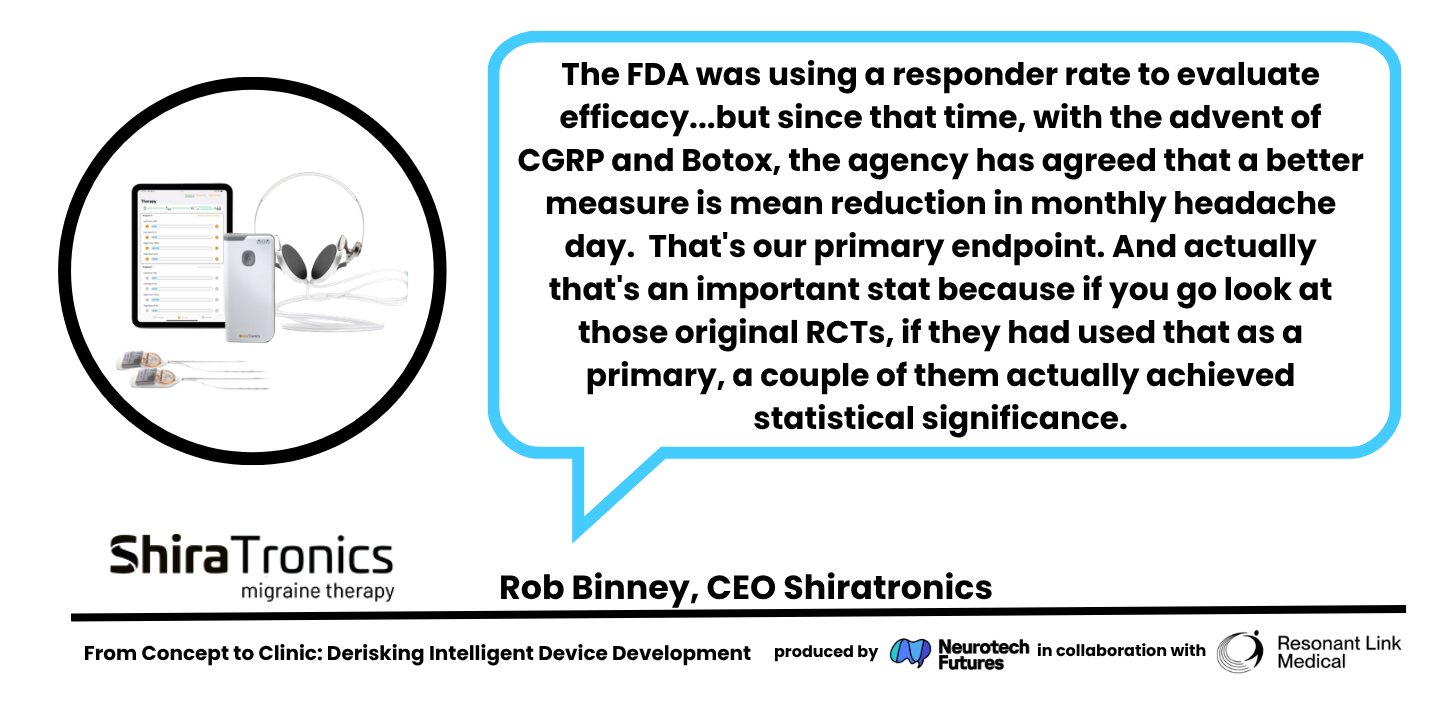
At the time ShiraTronics was founded in 2019, investor interest in implanted migraine treatment was frozen due to three failed randomized controlled trials by other companies. Shiratronics launched from the NuXcel accelerator to deliver a minimally invasive system to patients by addressing limitations of previous clinical studies and broadening FDA guidelines for trial endpoints in migraine trials.
With regulatory clarity established, the company earned the FDA’s Breakthrough designation in 2021 and completed a successful pilot study in 2023. This in turn unlocked a $66M Series B in 2024. This round was sized to carry the company through pivotal trial completion. ShiraTronics’ momentum to date offers an example of the tight loop across regulatory strategy, product innovation, and fundraising success.
In clinical trials for new devices, selecting the best endpoints and ensuring successful data capture are critical choices that can benefit from external guidance by an experienced partner or outside expert. Well before commercial launch, understanding what the market will or won’t pay for can inform platform design. This can help startups avoid shipping next-generation products that do not fully align with market needs, limiting market share and brand position.
3. Build for Scale Early
As with deliberate architecture towards each milestone, the companies that succeed are those that have a clear view on how and why their business will exit. If market success involves a path other than acquisition, clarity is equally important.
Traditionally, medtech M&A involves large strategic buyers, such as Medtronic, Boston Scientific, or Abbott. Buyers generally seek de‑risked systems that are platform‑compatible, meaning they are complementary to existing products and sales channels, competitive and differentiated, clinically demonstrated in the right populations, and ideally revenue-generating.
However, the shift to intelligent devices expands commercial horizons beyond traditional markets. Across clinical and consumer health tech segments, more companies’ moats are based on data and AI. Behind Oura’s $16B S-1, WHOOP’s $575M raise at a $10.1B valuation was led by three sovereign wealth funds as well as Abbott and Mayo Clinic. Crypto platform Tether invested $200M in Blackrock Neurotech and led a $50M round in EightSleep based on sleep data.
“We’re seeing platform medtech companies now with more frequency,” noted Campbell Murray, co-founder and Managing Partner at DoublePoint Ventures which led Synchron’s $200M Series D last year following the startup’s foundation model partnership with NVIDIA. “They’re integrating a digital health component... they’re AI-native med tech companies... you’re now starting to think, well, could Apple be an acquirer? Could Amazon be an acquirer?”
Raymond W. Cohen knows a thing or two about exits. In 2024, Boston Scientific acquired his publicly traded company Axonics for $3.7B, representing the largest neurotech exit in history. He followed that in 2025 by leading SoniVie to a $600M exit and Nalu Medical to a $533M – both exits to Boston Scientific as Board Chair, a role he now serves at Resonant Link Medical.
In a recent interview Cohen weighed in on his playbook for success. “The skill sets required to commercialize are very different than developing a product, or running clinical studies, etc. The question for early-stage founders is, do you believe it is feasible to take this project all the way to market?”
He offered founders four lessons for realizing success in medtech:
- Think Exit Early: Identify potential acquirers from the outset and tailor your strategy accordingly.
- Prioritize People: Invest in building a strong, cohesive team that can execute flawlessly.
- Raise More Capital: Don’t fear dilution. Raise more money than you think you’ll need, given things always take longer and cost more.
- Maintain Transparency: Keep communication open with your team and stakeholders to build trust and align goals.
Most technology executives dream of one big exit in their career. Under Cohen’s business leadership, Prabodh Mathur led the product development efforts for Axonics and Nalu. Mathur’s approach involves building and leading his engineering teams to create business value as a core responsibility, rather than a downstream possibility.
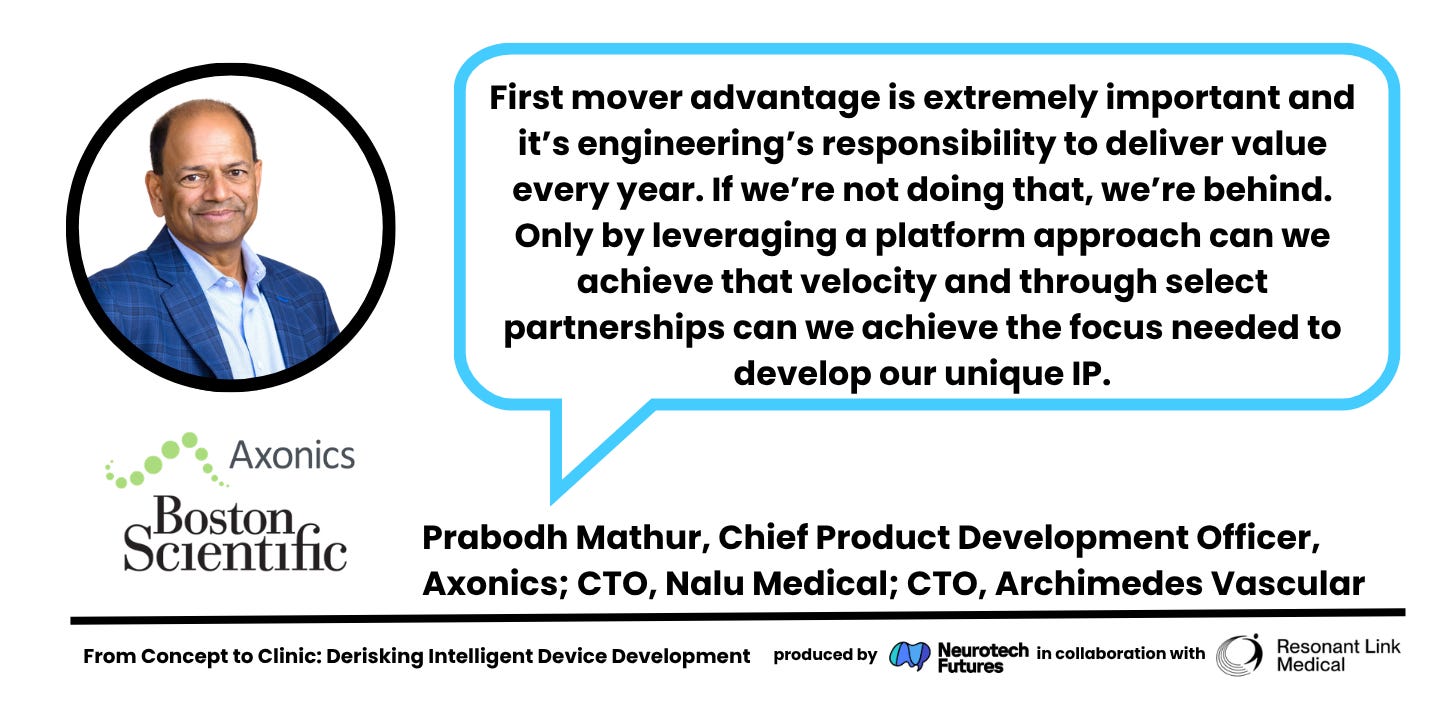
Mathur started at Axonics in 2014, where he led development of the r-SNM System, a rechargeable, full-body MRI-compatible sacral neuromodulation device for the treatment of urinary and bowel dysfunction. r-SNM received initial FDA approval in late 2019. He also oversaw the launch of the company’s second-generation, recharge-free SNM system which was FDA-cleared in March 2022.
Following the completion of Axonics’ acquisition by Boston Scientific, Mathur joined Nalu Medical in May 2025. The Nalu System consists of a battery-free, miniaturized implantable pulse generator powered wirelessly by an external wearable, and controlled through a smartphone-based remote control app. Boston Scientific, already an investor in Nalu since 2017, wrote in a post-acquisition note “what stood out right away was the level of miniaturization they were able to achieve.”
Conclusion: Creating Advantages through Strategic Collaboration
Intelligent medical device development is complex, regulated, and capital-intensive, but today’s ecosystem of market precedents and focused partners provide a roadmap that can make the commercial journey less daunting. The companies that succeed are those that de-risk their product development and clinical strategy together, invest capital against value-creating milestones, and seize competitive advantages by choosing early on what to build and what not to build.
Founders navigating the transition from concept to clinic can gain strategic short-term and long-term advantages by partnering with validated platforms and partners as force multipliers. Marwan Berrada-Sounni, managing partner at venture studio T45 Labs, advises founders to preserve capital by “spending against the risks that must be retired at each particular stage and avoiding fixed costs that the company has not yet earned the right to carry.”
He cautions founders not to overindex on developing innovative technology without building an attractive business around it. Establishing manufacturing and economic targets by or before Series A is a best practice. Across all funding stages, Berrada-Sounni asks the same question: “What evidence will materially increase the value of the company, and what is the most capital-efficient organization capable of producing that evidence?”
As the leader in wireless power and data solutions for each stage of the development and submission process, we help implantable device developers:
- Accelerate development timelines by removing non-core elements from the critical path
- Preserve capital by avoiding redundant internal builds
- Access specialized expertise (e.g., wireless power, system integration, closed-loop sensing, Bluetooth antenna design)
- Reduce integration risk at the system level
- Maintain sharp internal focus on core innovation and IP
Complexity is best navigated by founding teams who stay focused on translating their core differentiators into breakthrough treatments that reach the market. Then device architecture, team building, clinical evidence, and regulatory approvals can be accomplished in capital-efficient ways that maximize value for investors, acquirers, and patient communities.
No innovation, however promising, will help people in need unless it reaches the market. Medical device businesses that make early, capital-efficient investments in risk reduction and value creation are setting themselves up for short-term and long-term success.
Additional Resources
- Podcast interview: What separates promising MedTech startups from the rest
- See Resonant Link Medical’s Vivigo™ 20-Minute Wireless Charger in action here
- MD&M 2026 Keynote: $6.1B Advice from Ray Cohen and Tom West of Nalu Medical
This article was produced by Neurotech Futures in collaboration with Resonant Link Medical as part of the Neurotech Futures Ecosystem Partnership.